WAYS TO FIGHT MENTAL DISORDERS

When we fall or get injured, it’s only natural to immediately ask for help because it hurts and we want to feel better. However, if some is struggling with internal pain, has loneliness, depression, anxiety, isolation, or hopelessness, or someone perceives others are judging them due to their mental illness, many people hesitate to ask for help in the same way they would for a physical injury. Unfortunately, this is the case for many who suffer from a mental illness, such as anxiety, PTSD, depression, bipolar disorder, obsessive-compulsive disorder or schizophrenia. There are many reasons people keep their feelings quiet and don’t ask for help. Some examples are when people worry about what others may think of them or worry, they will be judged by their mental illness, or struggle with unhelpful thoughts such as “asking for help is a weakness.” Perhaps people believe seeking help shows there is something wrong with them. Messages people receive from others, the media, their culture, society, and from themselves often cause much worry and anxiety and can hinder recovery and seeking help.
YOGA

It moves you from the sympathetic nervous system to the parasympathetic nervous system, or from
flight-or-flight to rest-and-digest. You typically have less anxiety and enter a more relaxed
state. As soon as you start breathing deeply, you slow down out of fight-or-flight and calm your
nervous system.
It helps you build your sense of self. Through yoga, you get to know yourself and cultivate a
more nonjudgmental relationship with yourself. You are building self-trust. You exercise more
and eat healthier, because your unconscious mind tells you, “I’m worthy of this me time, this
effort.” At the end of the day, everything comes down to your relationship with yourself. When
you get more confident and become more rooted in your sense of self and your center, you develop
a healthy, balanced ego, where you have nothing to prove and nothing to hide. You become
courageous, with high willpower. You’re not afraid of difficult conversations—you know you’re
still going to be OK at the end of the day.
It helps you become aware of your “shadow” qualities. The yoking of solar and lunar (light
and dark) in yoga makes us recognize qualities in ourselves that we were not aware of, helping
us be more mindful. A lot of my work centers on the shadow concept from Carl Jung. How do we
look at those places in our bodies where we hold tension, tightness, knots of energy? That’s
typically where we are holding our psychological or emotional energy. We work from the outside
in, so asana is so important. A backbend will open your heart and release the stiffness between
the shoulder blades—at some point, you will have some sort of emotional release, which you may
or may not be conscious of. It’s about doing the inner work to shift or change and be open to
doing your best with your weaknesses and faults.
MEDITATION
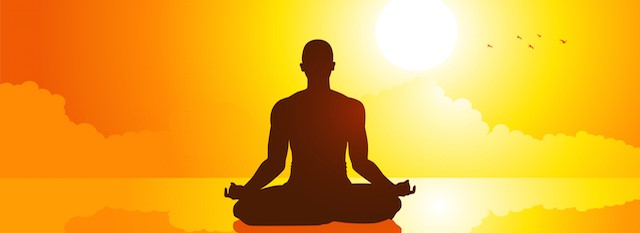
Since time immemorial, meditation has been used to attain enlightenment. Wise ones have touted
it as a means to get rid of misery. Experiences and modern research show that meditation is
helpful for life goals as regular and diverse as overcoming a traumatic heartbreak to increasing
daily productivity. Modern day meditators call it the food for the soul and suggest that the
practice can unlock doors to a better life.
Research has shown benefits of meditation towards
mental health. It helps relieve stress, reduce anxiety, increase kindness, improve
self-awareness and self-esteem.If stress has you anxious, tense and worried, consider trying
meditation. Spending even a few minutes in meditation can restore your calm and inner peace.
Anyone can practice meditation. It's simple and inexpensive, and it doesn't require any special
equipment.
And you can practice meditation wherever you are — whether you're out for a walk, riding the
bus, waiting at the doctor's office or even in the middle of a difficult business meeting.
MEDICATION

There are several different types of drugs available to treat mental illnesses. Some of the most
commonly used are antidepressants, anti-anxiety, antipsychotic, mood stabilizing, and stimulant
medications.
When treating depression, several drug options are available.Your healthcare
provider can determine which medication is right for you. Remember that medications usually take
4 to 6 weeks to become fully effective. And if one drug does not work, there are many others to
try.In some cases, a combination of antidepressants sometimes called augmentation, may be
necessary. Sometimes an antidepressant combined with a different type of drug, such as a mood
stabilizer (like Lithium), a second antidepressant, or atypical anti-psychotic drug, is the most
effective treatment.
Side effects vary, depending on what type of drug you are taking, and may improve once your body
adjusts to the medication.
EDUCATE YOUSELF AND OTHERS
Knowledge is power. Educate yourself (from reputable sources) about mental illness, symptoms and treatments. Being informed is the first step in getting the proper treatment one needs for emotional wellness. In addition, educate others that mental illness is a physical disorder that can be treated just as one would treat any other medical issue. Arm them with factual information to replace much of the rumors or inaccuracies surrounding mental illness. You (or your loved ones) can also talk openly about the illness and daily struggles with safe and supportive people. Telling supportive persons about one’s recovery process will help people to understand the challenges others faces. When people truly understand what mental illness is, they are more likely to move past their negative views. Remember to avoid expecting people to understand right away. Stigma takes time to overcome. Be gentle with yourself and others in this process. Family therapy may also be helpful and be a neutral place to discuss barriers and obstacles.
JOIN A SUPPORT GROUP

Don’t isolate. If people don’t tell anyone about their struggles with mental illness, no one can help them. There are many local and national support groups that offer programs and resources. In addition, these groups are working hard to educate people with mental illnesses, their families, their supportive persons and their communities to help reduce stigma and move toward empowerment and recovery. The National Alliance on Mental Illness (NAMI) or the Department of Veterans Affairs (if it applies), are great places to start, and both are reputable resources. Check your county to see what programing is offered. Often there are online groups and online resources for those diagnosed with mental illnesses, along with resources and groups for their supportive persons.
SPEAK-UP AGAINST STIGMA

Whether it’s with a group of friends or in front of a large audience, express your opinions in an assertive and confident manner. Educate others respectfully about mental illness, to help promote change. Remind people that they wouldn’t make fun of someone suffering from heart disease, diabetes or cancer. Making fun of someone with mental illness is harmful, and only increases stigma, and promotes discrimination. Speaking up will not only educate the public and help reduce stigma, but it could also give courage to others facing a similar challenge, and help them to seek help. Remember self-care during this process is vital. You are not alone; you do not have to fight every battle. Reach out for help, and remember: self-compassion and self-care is a gift we all need to open daily.